
HOTEL MARKETING AGENCY · SAN DIEGO
Every OTA Booking Costs You 15 to 25 Percent. We Work on the Rest.
Direct booking strategy, metasearch, paid, content and CRM for independent hotels, boutique properties and resorts — measured in booking mix and RevPAR, not impressions.
THE MATH NOBODY PUTS IN THE PROPOSAL
A Full Hotel Is Not the Same as a Profitable One
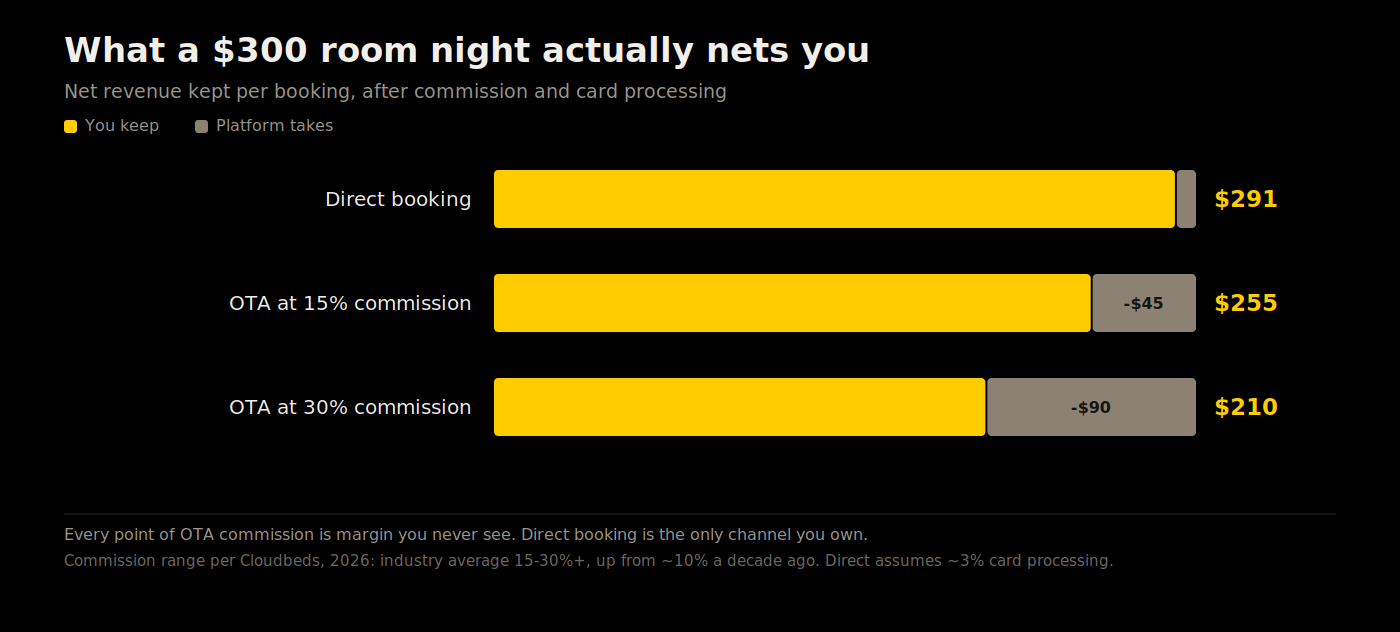
You can run at 90% occupancy and still be handing a quarter of your room revenue to Booking.com and Expedia. Most hotel marketing is sold on occupancy because occupancy is easy to move — drop the rate far enough and the rooms fill.
The work that actually changes the P&L is shifting the booking mix: more guests arriving through your own site at your own rate, more repeat stays, fewer commissioned nights. That is slower, less flattering on a dashboard, and it is the number we ask to be judged on.
WHERE WE START
Win the Guest Back at the Last Click
Most guests who book you through an OTA have already seen your property. They found you on a listing site, then went looking for your name — and either landed somewhere slow, unclear or more expensive than the OTA, or did not find you cleanly at all.
So the first work is usually not campaigns. It is rate parity, a booking engine that does not lose people at step two, brand-term paid coverage so an OTA is not buying your own name, metasearch that shows your direct rate beside theirs, and property pages that load before someone gives up.
Then demand generation on top. In that order, because paying to send more traffic into a leaking funnel is the most expensive mistake in this category. Our web team handles the site work; we do not hand you a list of fixes and wish you luck.
WHAT WE DO
Hotel Marketing Services
Six areas. Almost every engagement starts with the first one, because until direct booking works the rest is subsidising somebody else's margin.
Direct Booking Strategy
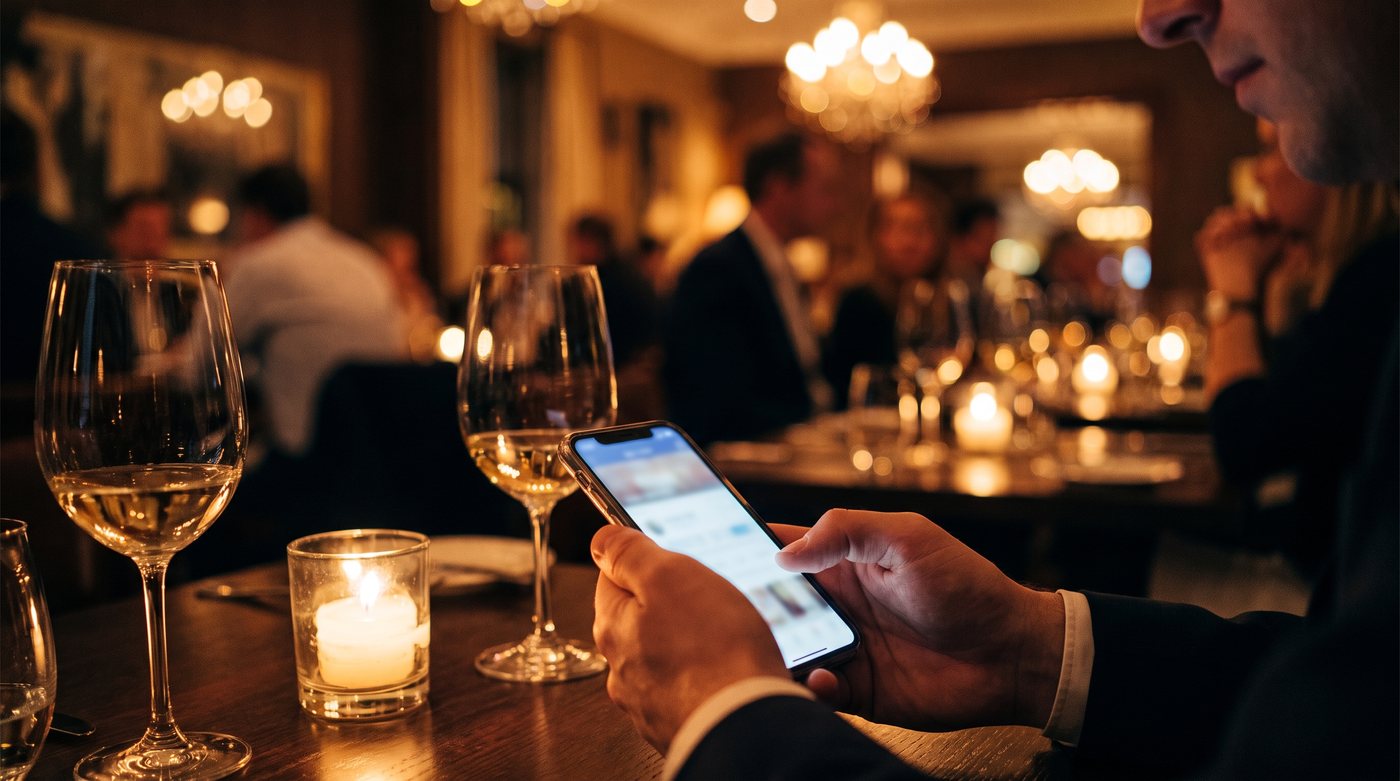
Booking engine conversion, rate parity, brand-term defence and the offers that make booking direct obviously better. The single highest-margin lever a hotel has.
Metasearch & Paid
Google Hotel Ads, Tripadvisor, Trivago and Kayak alongside search, Meta and display — run by the same team as our paid media practice, bid to profit per booking rather than to volume.
Photography & Content
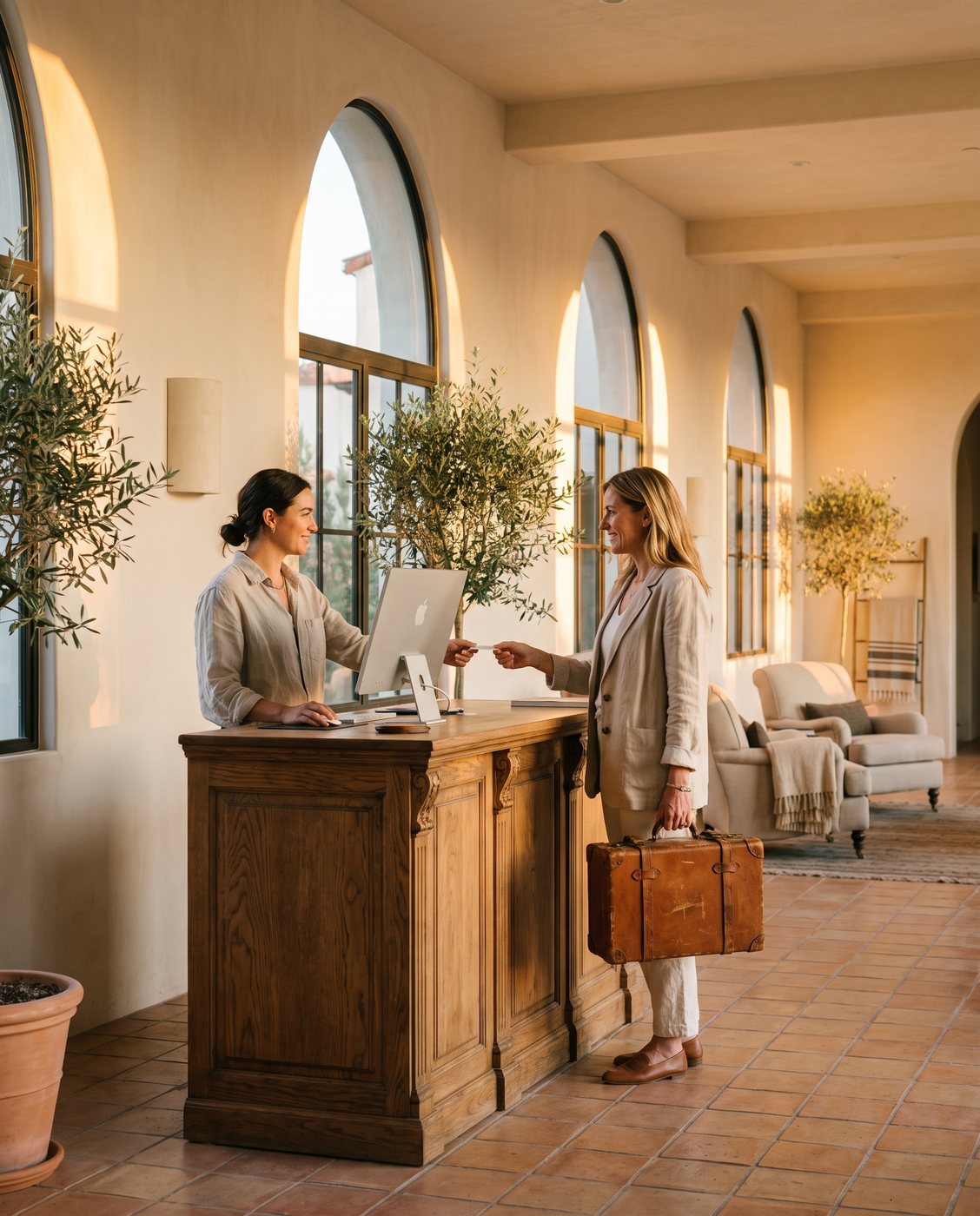
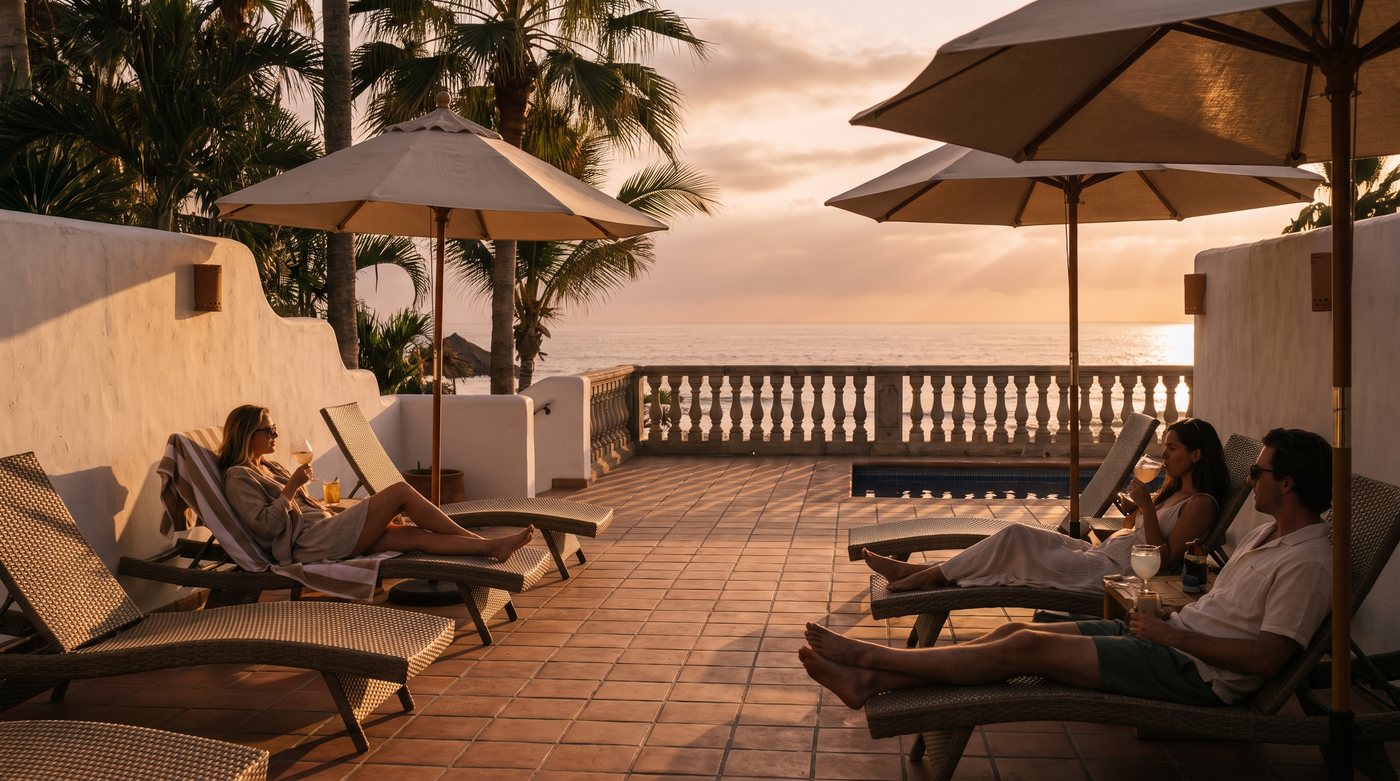
Rooms, food and beverage, spaces and neighbourhood, shot properly. Hotel booking decisions are made on images faster than on copy, and licensed stock is visible from a mile away.

CRM, Email & Loyalty
Pre-arrival upsells, on-property messaging, post-stay follow-up and win-back. A repeat guest costs nothing in commission, which is why email and SMS pays faster here than almost anywhere.

Revenue Reporting
Booking mix, direct share, cost per acquired room night, RevPAR contribution and repeat rate — reconciled against your PMS, not against a platform's self-reported conversions.
HOW AN ENGAGEMENT RUNS
The Formula for Hotel Marketing
Four stages. Booking-mix movement is usually visible by month three and meaningful by month six.
01. Audit
Booking mix, rate parity, engine conversion, brand-term coverage, site speed and what your PMS says about where guests actually come from.
02. Fix the Funnel
Engine, parity, brand defence and property pages. Unglamorous, usually the fastest money, and often done before a campaign runs.
03. Build Demand
Metasearch, paid, SEO, content and creator work aimed at the segments and seasons where you have room to sell.
04. Report on Revenue
Direct share, commission avoided, cost per room night and repeat rate. If direct share is flat we say so rather than showing you impressions.
INDEPENDENT & BOUTIQUE PROPERTIES
You Are Not Competing With Marriott. Stop Marketing Like It.
Independent and boutique hotels lose when they try to match a chain on reach and loyalty points. They win on the things a chain cannot replicate: a specific neighbourhood, a specific room, a bar the locals actually use, a story a guest will tell somebody else.
That means narrower targeting, better photography, real editorial about the area, and partnerships with the restaurants, operators and creators around you. It also means being honest that some segments — large groups, corporate rate programmes — are not worth chasing.
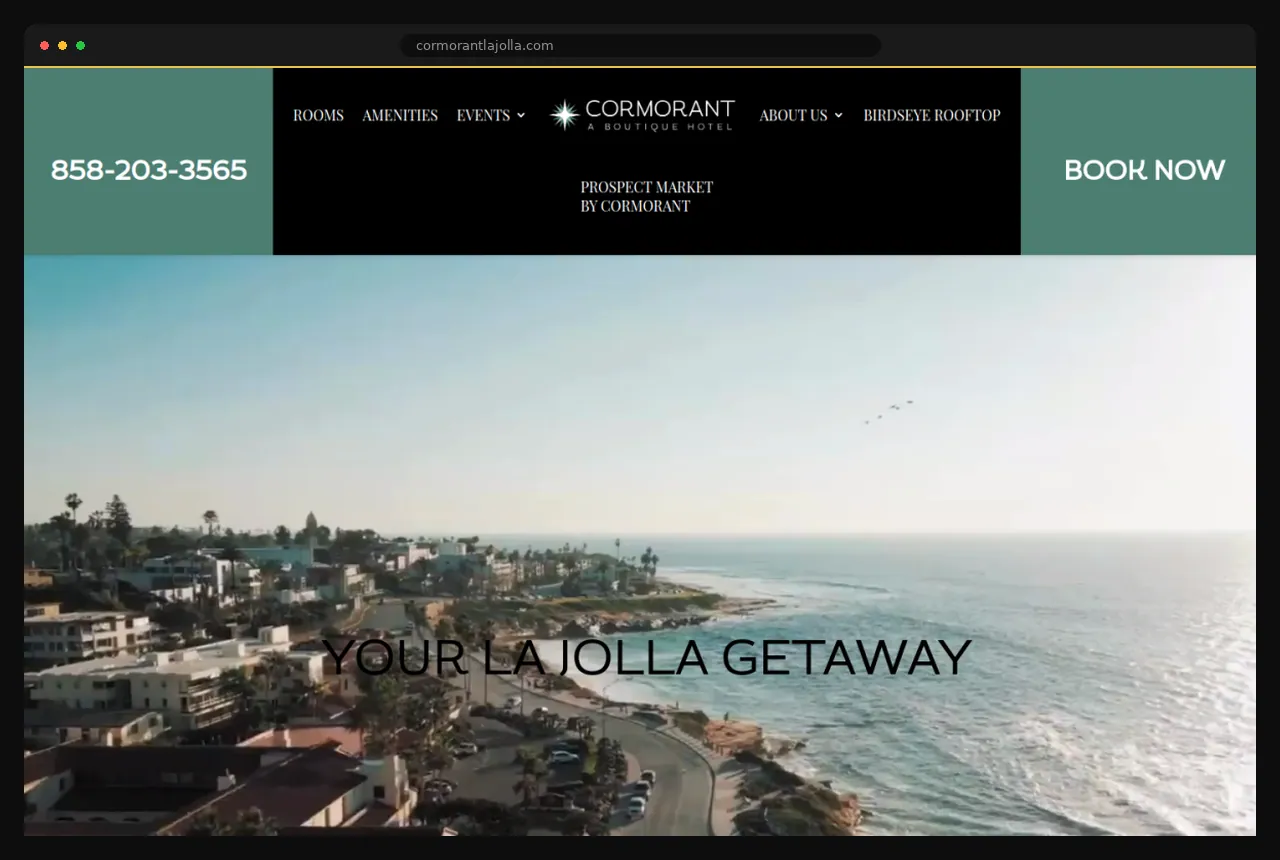
We built and market the site for a La Jolla boutique hotel on exactly this basis, and the portfolio-level search results are on our results page.
A HOSPITALITY TOWN
San Diego Runs on Visitors, and the Calendar Is Brutal
Summer sells itself. The rest of the year is where hotel marketing is won or lost here — shoulder season, midweek, Comic-Con and convention compression, the weeks either side of a holiday when everybody drops rate at once.
We are at 770 First Avenue downtown and we work this calendar constantly across hotels, restaurants and bars. That means we know which weekends actually need paid support, which ones are already sold, and which local partnerships fill a Tuesday — the sort of thing that does not appear in a national playbook.
This page is one part of the practice. We also run restaurant marketing, hospitality group marketing, destination and tourism marketing, event marketing and hospitality PR — the overview sits on our hospitality marketing page.
We work with businesses across Downtown, La Jolla, Carlsbad, Encinitas, Chula Vista, Oceanside, Escondido and Coronado — the full list is on our service areas page.
Grow Your Brand With Our Marketing Formula
Discover how our expert strategies can elevate your business to the next level.
Not big on forms? Call us at (619) 995-8333
"*" indicates required fields
What our Clients are saying
By far the best marketing company in San Diego! They are on top of it- the social posts are on time and the website updates and SEO are effective. They built a WordPress website for us and we couldn’t have been happier- highly recommended
Formula Marketing has been a phenomenal company to work with. The entire team is professional and very talented. They are clearly passionate about the work they do and have helped our business create an amazing social media presence, which has ultimately increased our sales tremendously. I highly recommend working with Formula Marketing!
Best marketing company in San Diego. They helped take my business to the next level. With Formula Marketing SD I truly feel like I have an amazing team on my side helping me every step of the way.
QUESTIONS
Hotel Marketing FAQs
How much does hotel marketing cost?
Our hotel engagements typically run $4,000 to $12,000 a month plus media, depending on room count, how many properties and whether photography and site work are in scope. For a single independent property, expect the lower half of that. Below about $3,000 there is not enough time in the month to manage metasearch properly, and metasearch is usually where the return is.
How quickly can we shift bookings away from OTAs?
Brand-term defence and rate parity fixes can move direct share within weeks because they capture demand that already exists. Genuine mix change — five to fifteen points of direct share — is a six to twelve month project, and it depends as much on your booking engine and rate discipline as on marketing.
Should we stop using OTAs entirely?
No, and be suspicious of anyone who says otherwise. OTAs are an effective acquisition channel for guests who have never heard of you, and the billboard effect is real. The goal is to stop paying commission on guests who were already looking for you by name.
Do you work with the PMS and booking engine?
Yes. We integrate with the common systems — Cloudbeds, Mews, SiteMinder, SynXis, Little Hotelier and similar — so reporting reconciles against actual bookings rather than platform-claimed conversions. Where an engine is genuinely costing you bookings we will say so, even though replacing it is disruptive.
Do you run Google Hotel Ads and metasearch?
Yes, across Google Hotel Ads, Tripadvisor, Trivago and Kayak. Metasearch is the one place your direct rate appears beside the OTA rate at the moment of decision, so for most independent properties it is the highest-return paid channel available.
Can you handle photography and video?
Yes, shot in San Diego by our own crew. Rooms, food and beverage, spaces, amenities and neighbourhood. Booking decisions are made on images in seconds, and property photography is the asset that pays across your site, metasearch, OTA listings, paid and social at once.
What about resorts and larger properties?
We work with resorts and multi-outlet properties where food and beverage, spa and events each have their own revenue line and their own marketing job. That is a different scope than a 40-room boutique, and closer to our hospitality group work.
Do you only work with San Diego hotels?
Most clients are here, and the local calendar knowledge is a genuine advantage. We also work with properties elsewhere in California and out of state — the direct booking problem is identical everywhere; only the demand calendar changes.
Are you a hotel marketing consultant or an agency?
Both, depending on what you need. Some properties want a strategy engagement and a plan their own team executes; most want us running it. The consulting-only version is a fixed project with a defined deliverable, and we will tell you which one you actually need after the audit.
How do you measure success?
Direct booking share, commission avoided, cost per acquired room night, repeat guest rate and contribution to RevPAR. Occupancy on its own is not a success metric — it can always be bought by discounting, which is why so many reports lead with it.
What Is Your Direct Booking Share?
If you do not know it off the top of your head, that is the first thing worth finding out. Send us your booking mix and we will tell you what it should look like for a property like yours, and what it would take to get there.